

Your fields are far apart, and cell service is hit or miss. Business-grade two-way radios give your whole crew instant contact from the barn to the farthest field, so harvest, livestock work, and repairs all keep moving.
You’re in good hands here! Since 1997, we’ve helped hundreds of farms across the country stay connected. Here’s how to pick the right radio for yours.
What's the Best Two-Way Radio for a Small Farm?
The Motorola CP100d-UA is our top pick for small farms. Farmers consistently praise it for its rock-solid durability, clear audio, and straightforward operation. No complicated menus. No steep learning curve. Just reliable communication, every time.
That said, radios aren't one-size-fits-all. The right radio for your farm depends on how much land you're covering, how many teams you're managing, and the conditions your equipment needs to handle. Let's break it down.
Why Small Farms Need Quality Radios
The tractor is stuck in the lower field. It's been 20 minutes, and no one knows because the crew is scattered—some in the greenhouse, some near the barn, all too far to shout. Meanwhile, the irrigation system has been leaking for an hour, and the delivery truck just pulled up with no one at the loading dock.
Tasks slip. Time is wasted. Everyone's out of sync.
These aren't rare disasters—they're everyday realities on a working farm. Quality two-way radios solve all of this instantly. Here's what to look for when comparing your options.
Key Features to Look For
Long Battery Life
Farming days start early and end late. Your radios need to keep pace—from morning chores straight through to evening clean-up—without needing a mid-shift recharge. Look for radios that offer at least 8–12 hours of battery life on a single charge.
Weatherproof and Dustproof Build (IP Rating)
Rain, mud, dust—farm life is messy by nature. A radio with a solid IP (Ingress Protection) rating can handle splashes, dust, and the general chaos of farm work without breaking down. Don't overlook this one.
MIL-STD-810 Durability
Radios on a farm get dropped, tossed in truck beds, and knocked around constantly. MIL-STD-810 certification means the radio has been tested to military standards for shock, vibration, and temperature extremes. It's a reliable indicator that your investment will last.
Clear Audio with Noise Cancellation
Tractor engines, strong wind, and animals make for a noisy environment. Noise-canceling microphones and strong speakers ensure that every message gets through—even when the environment is working against you.
Coverage: Matching Radio Power to Your Farm's Size
One of the biggest mistakes buyers make is choosing a radio with too much—or too little—power for their needs.
For most small farms, 1–2 watts is the sweet spot. You'll get reliable coverage across 1–2 miles, which is plenty for the typical farm layout. Since farms are generally open terrain, VHF (Very High Frequency) radios are the way to go. VHF signals travel better across open fields compared to UHF, which is designed for buildings and indoor use.
For farms operating across multiple locations, cities, or states, consider LTE and Wi-Fi enabled radios like the Motorola WAVE PTX series. These radios connect over cellular and WiFi networks, giving you virtually unlimited coverage. More on these below.
How Many Channels Do You Need?
Channels let you segment team conversations, keeping communication focused and clutter-free. For a small farm, we recommend setting up at least three dedicated channels:
- Field Operations: Planting, harvesting, irrigation, and tractor coordination
- Barn & Livestock: Feeding, animal care, equipment checks, and fencing issues
- Management & Coordination: Farm owner or supervisor check-ins, updates, and quick responses to issues
Easy breezy. That's concise and direct communication.
Channels also work great for private conversations. Need to connect two staff members directly? "Sarah, call Tom on channel two." They can have a full conversation without broadcasting to the rest of the team.
Why Brand Matters
Not all radios are created equal. Generic or off-brand radios might look tempting at first glance, but they tend to fall apart within a year—costing you more in replacements than a quality radio would have in the first place.
Motorola and Kenwood are the two most trusted brands in the two-way radio industry. Here's why:
- Purpose-built for reliable, durable communication
- Intuitive and easy to use—no training required
- No monthly cell phone plans (subscription-free operation)
- Tested for 5 years of real-world field use
- Backed by manufacturer warranties of 1–3 years depending on the model
Both brands are a proven return on investment for farms of all sizes.
Our Top Radio Picks for Farms
Motorola CP100d-UA — Best Overall
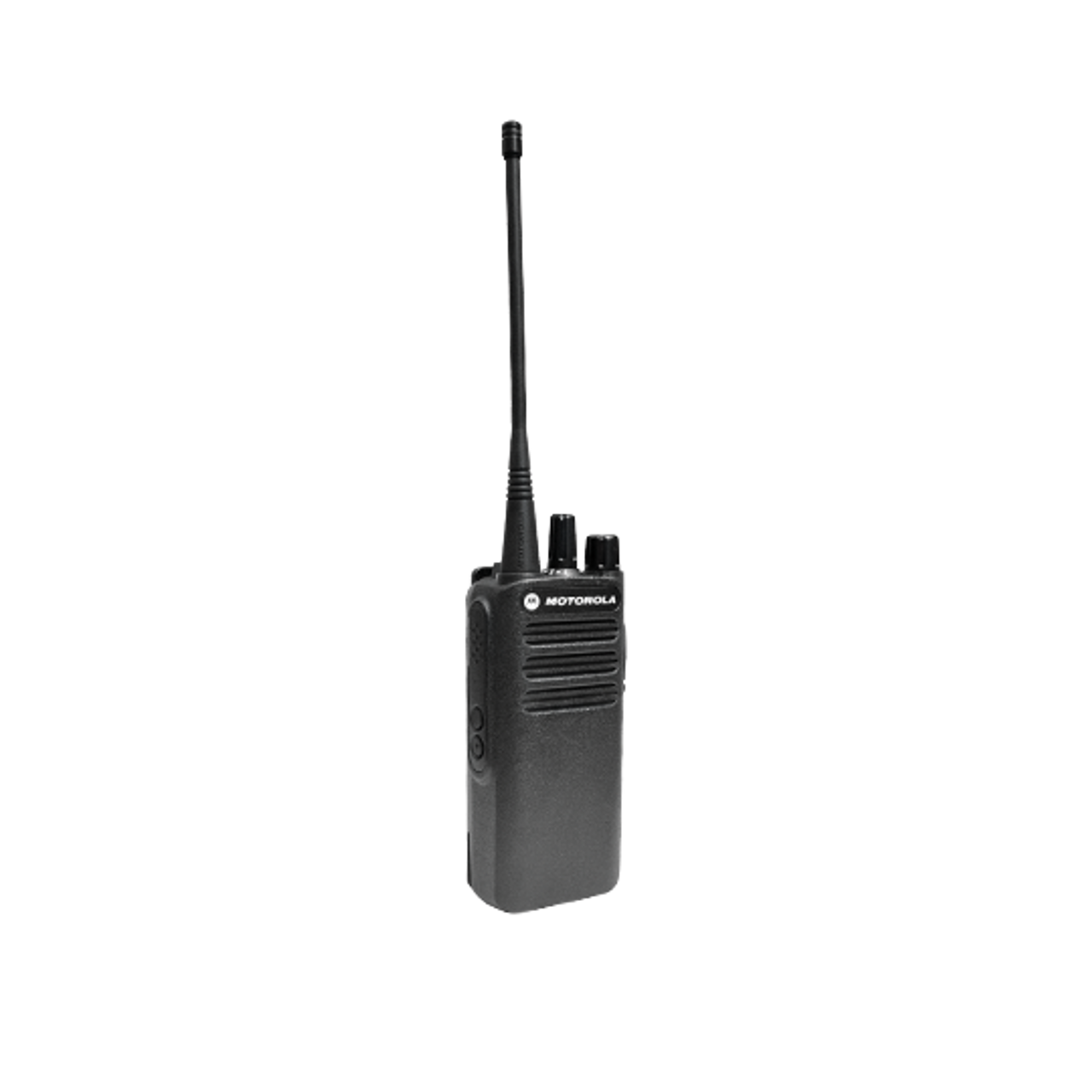
Our top recommendation for small farms. The CP100d-UA is built tough, sounds great, and is straightforward to operate—even for team members who aren't tech-savvy.
- Channels: 2
- Power: 1–2 watts
- Frequency: VHF
- Durable build designed for outdoor use
- Clear audio performance in noisy environments
- Simple, no-fuss operation
Motorola RMV2080 — Best for Growing Teams
A step up in channels, the RMV2080 is ideal if you need to segment your team across multiple workgroups.
- Channels: 8
- Power: 2 watts
- Frequency: VHF
- Lightweight and easy to carry
- Strong battery life for full-day use
- Reliable audio quality
Kenwood NX-P1202AVK — Best for Feature-Rich Communication
The Kenwood NX-P1202AVK is a powerhouse for farms that need more flexibility in how they communicate.
- Channels: 64
- Power: 2 watts
- Frequency: VHF
- VOX (voice-activated transmission) for hands-free use
- Scan function to monitor multiple channels
- Calling alert to reach specific team members directly
Motorola WAVE PTX Series — Best for Nationwide Coverage
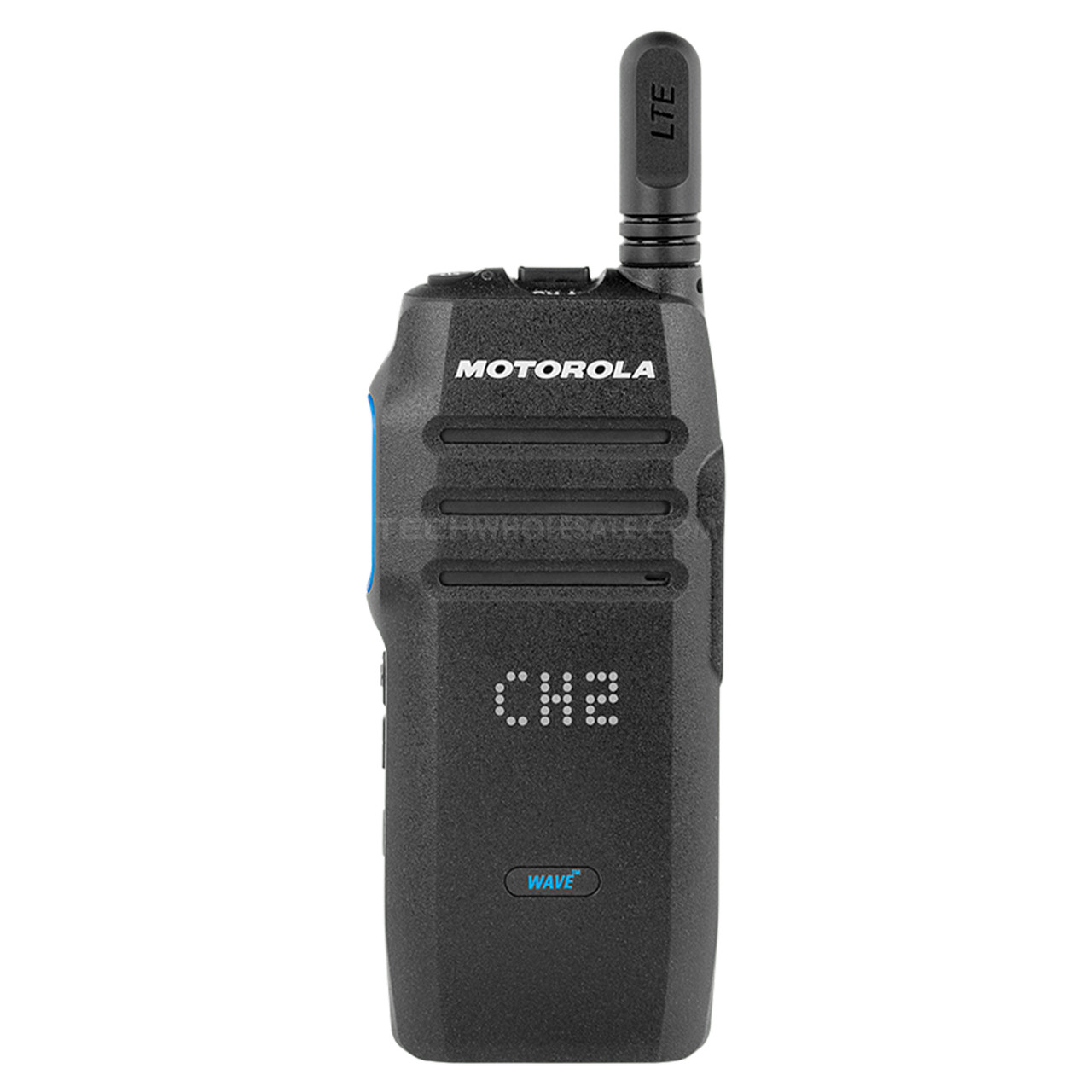
For farms with operations spread across multiple properties, regions, or states, the WAVE PTX series is in a class of its own.
- Coverage: Unlimited range via LTE and WiFi
- GPS Tracking: Locate staff in real time
- Emergency Button: Built-in safety feature for field staff
- Smartphone Integration: Talk to radios directly from your phone
- Failsafe Mode: When cell service or WiFi drops, the radio switches to antenna-to-antenna mode with up to 350,000 sq. ft. of coverage
- Requires a monthly subscription per device; lease-to-own payment options available
This is the right choice if your team is ever too far apart for traditional radio range.
Making the Right Call for Your Farm
Choosing the right radio comes down to three things: how much ground you need to cover, how many teams you're managing, and the conditions your radios will face day in and day out. A small farm with a tight-knit crew working open fields will do great with a VHF radio in the 1–2 watt range. A multi-site operation needs something with far greater reach.
The good news? You don't have to figure it all out alone.
Tech Wholesale has been matching farms with the right radios since 1997. Our team has over 25 years of hands-on experience in the two-way radio industry, and we include lifetime tech support with every purchase—so we're with you long after the sale.
Request a Quote for Our Best Pricing →
Have questions about which radio suits your farm? Reach out to our support team. We'll make sure you walk away with the right solution—not just the most expensive one on the shelf.